


Drop the Cat!
4.11.53K Reviews
App Specs
- Version
- 1.12.16
- Updated On
- License
- Free
- Downloads
- 1,000,000+
- Developer
- ACTIONFIT
- Categories
- Casual
- Platform
- Android
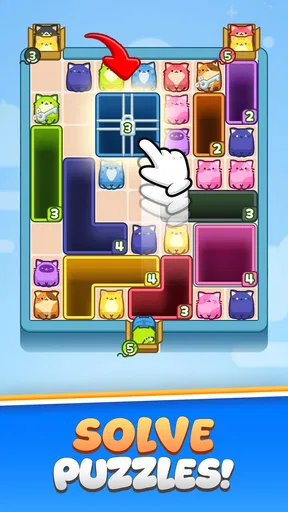
Screenshots
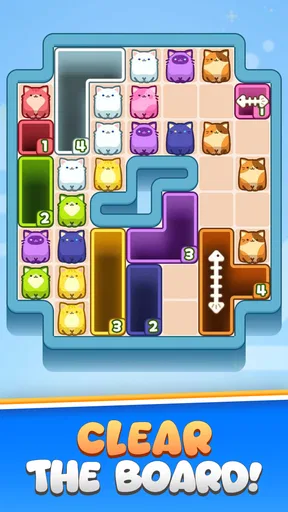
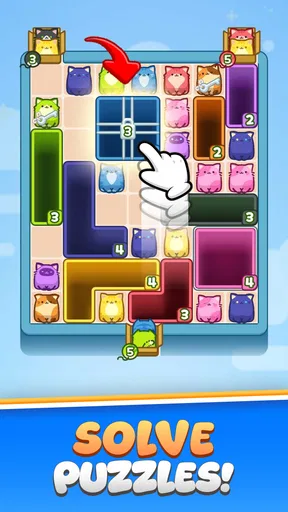
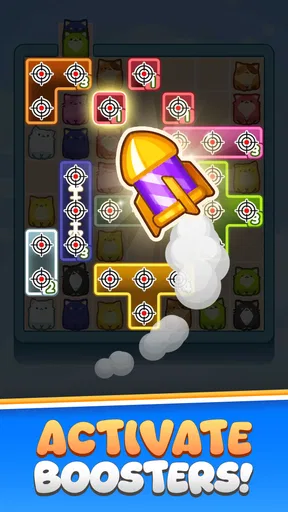



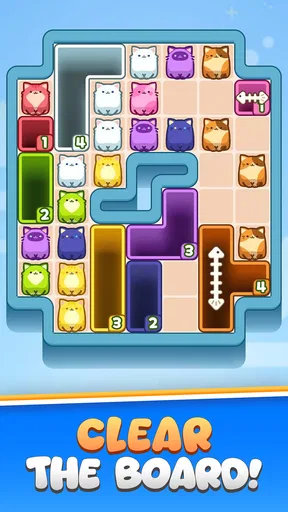
 Analysis by AppCompare
Imagine this: you're lounging on your couch after a long day, looking for something fun yet challenging to play on your phone. That's when you stumble upon Drop the Cat!, a delightful little puzzle game that's sure to keep your brain ticking and your fingers tapping.
Where the game stands now
Drop the Cat! is a casual puzzle game from ACTIONFIT, built around the simple pleasure of working out how to get a cat where it needs to go. Its current version is 1.10.93, and the game is free to download. That makes it easy to try without committing money upfront, though optional in-app purchases range from $1.99 to $109.99 per item. I’d treat those purchases as a reason to check the prompts carefully, rather than assuming every part of the game is free of spending choices.
The game is rated for Everyone, and its minimum operating-system requirement is version 10. Its average rating is 4.3 from around 35,000 ratings, with roughly 832 written reviews and over one million installs. Those figures suggest a sizeable audience, but they don’t tell me whether its particular puzzle style will suit you. The useful test is whether you enjoy pausing over a small problem, trying a move, and adjusting your plan when the first idea fails.
The version and release information give a snapshot of the product’s current state: it was released on July 29, 2025, and version 1.10.93 is the version to look for now. That establishes a baseline, not a story of what changed between releases. I wouldn’t infer new levels, improved controls, or other additions from a version number alone; it’s better to judge the game you can actually play today and watch for clear notes when it changes.
A Purr-fectly Engaging Puzzle Adventure
When I first opened Drop the Cat!, I was immediately charmed by its whimsical graphics and simple, engaging premise. The goal is straightforward but oh-so-addictive: guide a cute, curious cat through a series of intricate puzzles to reach its favorite toy. Who doesn't love a good cat-and-toy story?
The game mechanics are simple enough for beginners but layered with complexity to keep even the most seasoned puzzle solvers engaged. You’ll find yourself tilting, tapping, and swiping your way through each level, trying to figure out the best way to navigate obstacles and gravity-defying platforms.
Graphics and Sound
Visually, Drop the Cat! is a treat. The colors are vibrant, and the animations are smooth, making it a joy to play. The design strikes a perfect balance between being cute and functional, allowing you to focus on the puzzles without unnecessary distractions. And let’s not forget the soundtrack! It’s light-hearted and catchy, perfectly complementing the playful nature of the game.
Worth Reading Before You Choose

Flipboard Shows What News Apps Must Do Beyond the Feed

Switching to Android Auto Means Rethinking Your Driving Routine

Google Calendar Makes a Crowded Week Easier to Manage

Ludo King Makes the Most of the Minutes Between Plans

Baby Panda World Brings Quick Play to Modern Phones, but Its Game Library Feels Busy

ESPN’s Live Game View Makes Following Close Games Easier
Challenging Levels
As you progress, the levels become increasingly challenging, introducing new elements that require strategic thinking and precise timing. You'll often find yourself pausing to plan your next move, only to change your mind at the last second. Trust me; the "just one more level" syndrome is real with this one!
One of my favorite features is the hint system. If you ever find yourself stuck (which, let’s face it, will happen), you can use a hint to nudge you in the right direction. It’s a lifesaver without feeling like a cheat, keeping the game’s balance intact.
How I’d fit it into a day
This is the kind of puzzle game I’d open during a short break when I want to do something more engaging than scroll, but don’t have the time or energy for a long session. A level gives me a small, clear problem to focus on; if I get interrupted, I can put the phone down and return when I have a moment. The appeal is less about building a long routine and more about having a playful challenge ready when a spare pocket of time appears.
For example, on a commute with a few stops, I’d try a level, think through the route, and leave a difficult one unfinished rather than rushing a move just to finish before my stop. At home, I’d use the same puzzle differently: test a couple of approaches and take a hint only after I’ve genuinely run out of ideas. That keeps the hint useful as a nudge instead of turning it into the first move whenever a level slows down.
There is a practical trade-off here. Puzzles that ask for careful timing or precise input are less comfortable when I’m walking, standing in a crowded vehicle, or trying to play one-handed while doing something else. I’d save those moments for easier stages and play more attentively when I can keep the phone steady. If you mainly want a game that can be played without looking closely at the screen, this probably isn’t the best fit.
What makes the puzzle style work
The satisfying part is the small loop between observation and action: look at the obstacles, decide what to try, then see whether the cat’s route works. I find it more rewarding to pause before touching the screen than to make several hurried attempts. A useful habit is to notice which part of a route caused the failure, then change just that part on the next try. That makes experimentation feel purposeful and helps prevent repeating the same mistake without learning from it.
Hints are most valuable when I use them to break a genuine deadlock, not to skip the thinking altogether. I’d first inspect the whole path and identify the point where the cat’s movement could go wrong. If I still can’t see a promising next step, a hint can get me moving again while leaving some of the puzzle for me to solve. That balance matters: use help too early and the core satisfaction can fade; wait too long and a light game can become a frustrating chore.
The controls also call for a little patience. The premise invites experimentation, but trying to make several inputs at once can make it harder to tell what actually changed. I’d make one deliberate move, watch the result, and then decide what to adjust. That approach is especially helpful on stages where timing matters, because it separates a planning mistake from an input made too quickly.
Who should pick it up—and who might pass
I’d recommend it to someone who likes compact logic challenges, cute presentation, and the satisfaction of solving a route through obstacles. It should also suit casual players who want a game they can dip into without needing to learn a complicated control scheme first. The Everyone age rating makes it broadly approachable, though the best match is still someone who enjoys puzzle-solving rather than someone choosing a game only for its cat theme.
If you prefer fast action, competition, or a story that carries you through a long campaign, I’d look elsewhere. This game’s appeal is the immediate puzzle, not a promise of high-speed play or a narrative to follow. Likewise, a player who dislikes trial and error may find the need to reconsider moves irritating, even though that process is part of what makes a successful solution satisfying.
Compared with familiar casual alternatives such as match-three games or endless runners, this asks for more deliberate thought and less reflexive repetition. A match-three game is often easier to play while dividing attention; an endless runner usually puts the focus on reacting quickly. Here, I’m more interested in planning a route and learning from an unsuccessful attempt. That makes it a better choice when I want a small mental workout, but a weaker one when I just want something automatic to occupy my hands.
It also sits differently from large, story-led puzzle adventures. The straightforward cat-and-toy goal gives each challenge an approachable frame, while the level-based format is easier to fit around a busy day. If you want a deep narrative or a sense of exploration across a broad world, that simplicity may feel limited. If you want a clear objective and a quick reason to think, it is an advantage.
Spending and everyday friction
Because the game is free to download but offers optional purchases, I’d decide in advance how I want to handle spending, especially if a child is playing. The listed purchase range runs from $1.99 to $109.99 per item, so the upper end is substantial. I would not treat the free entry point as a guarantee that every optional offer will feel small. Take a moment to read any purchase prompt before confirming it, and use device-level purchase controls if you want an extra safeguard.
That price range doesn’t tell me what each purchase contains or whether a particular item is useful, so I wouldn’t buy something simply because I was stuck on one puzzle. I’d first try a different approach or use the hint system where appropriate. If spending is the main concern, the sensible choice is to enjoy the free download cautiously and decline anything that doesn’t clearly fit what you want from the game.
Another everyday consideration is attention. A puzzle that feels relaxing when you have a quiet moment can feel demanding if you’re tired or constantly interrupted. I wouldn’t use it as background entertainment while listening for something important; the route-planning is the point, and missing a detail can make a level feel harder than it is. It works best when I can give the screen a little focus, even if the session itself is short.
Why You'll Keep Coming Back
What keeps me coming back to Drop the Cat! is its blend of simplicity and challenge. It’s perfect for quick pick-up-and-play sessions, whether you're on a break or just killing time. Yet, it offers enough depth to satisfy those longer gaming sessions when you’re in the mood to conquer level after level.
Plus, the sense of satisfaction when you finally guide that little furball to its toy is unmatched. It’s a rewarding experience that keeps you hooked, always curious about what the next level will bring.
What the version can—and can’t—tell you
For someone already playing, the current version number is a useful way to check that they have the same release as a friend or to describe which build they are using when discussing a problem. It is not, by itself, evidence that the controls, level design, or purchase options have changed. I’d look for explicit release notes before expecting an update to fix a particular frustration or add a feature I want.
That distinction is worth keeping in mind because a game can have an established audience and still change over time. The current rating and install count give a sense of how widely it has been tried, while the release date and version identify its present point in the product’s life. Neither guarantees that a future update will improve the exact part of the experience you care about. If you already enjoy its basic puzzle loop, updates are something to evaluate when they arrive, not a reason to assume a particular direction.
For a new player, I’d start by checking that the device meets the minimum operating-system requirement, then try the free game with a few levels before deciding whether its pace suits me. For an existing player, I’d pay attention to whether a change affects the things that matter most in practice: how clearly a puzzle reads, how reliably inputs respond, and whether optional purchases remain easy to ignore. Those are more useful signals than a version number on its own.
Final Thoughts
In a sea of mobile games, Drop the Cat! stands out as a refreshing, fun, and challenging puzzle game. It’s perfect for cat lovers and puzzle enthusiasts alike. The developers have done a fantastic job creating a game that is both accessible and addictively challenging, ensuring you’ll keep coming back for more.
My main reservation is that its appeal depends on enjoying the act of working through a puzzle. If you want constant novelty, social competition, or a game that asks almost nothing of your attention, this is not the one I’d choose. And if you’re wary of optional spending, keep an eye on prompts rather than assuming that free-to-download means there are no paid choices. Those are manageable limits, but they are worth knowing before you settle in.
For me, the best way to approach it is as a small, focused break: look carefully, try one idea at a time, and save hints for the point where they can genuinely help. That routine lets the simple premise do its job without turning each level into a race. It is a good fit when I want a cheerful puzzle to solve at my own pace, but not when I’m looking for a substantial story or a reflex-heavy challenge.
So, if you’re looking for a game that’s as delightful as it is engaging, give Drop the Cat! a try. It’s available for both Android and iOS, making it the perfect addition to your mobile gaming repertoire. Happy puzzling!
Pros
- Engaging and challenging puzzles.
- Cute and appealing graphics.
- Intuitive touch controls.
- Free to play with optional purchases.
- Regular updates and new levels.
Cons
- Ads can be intrusive.
- Requires internet for some features.
- Difficulty spikes occasionally.
- Limited lives can be frustrating.
- Some in-app purchases are pricey.
FAQs for Drop the Cat!
What is the main objective of Drop the Cat!?
Drop the Cat! is a physics-based puzzle game where players aim to guide a cat safely to a designated spot using a variety of objects and obstacles. The goal is to strategically manipulate the environment to ensure the cat lands safely, providing a fun and challenging experience for all ages.
Is Drop the Cat! free to download and play?
Yes, Drop the Cat! is free to download and play on both Android and iOS platforms. However, the game includes in-app purchases that allow players to unlock additional levels, remove ads, or purchase power-ups to enhance gameplay. These are optional and not necessary to enjoy the full game experience.
Are there any ads in Drop the Cat!?
Yes, Drop the Cat! contains ads which appear at various points during gameplay. These ads help support the developers and keep the game free. Players have the option to remove ads through a one-time in-app purchase if they prefer an uninterrupted gaming experience.
What age group is Drop the Cat! suitable for?
Drop the Cat! is designed for players of all ages, offering simple mechanics that are easy to grasp for younger players, while the increasing complexity of levels provides a satisfying challenge for older players. It's a family-friendly game that encourages problem-solving and strategic thinking.
How often are new levels or updates added to Drop the Cat!?
The developers of Drop the Cat! regularly update the game to add new levels and features. While there is no fixed schedule, updates typically occur every few months, bringing fresh challenges and enhancements based on community feedback. Players are encouraged to keep the app updated to enjoy new content.


